Turnstiles Have Rate Limits Too: Why the 429 Belongs in Facility Security
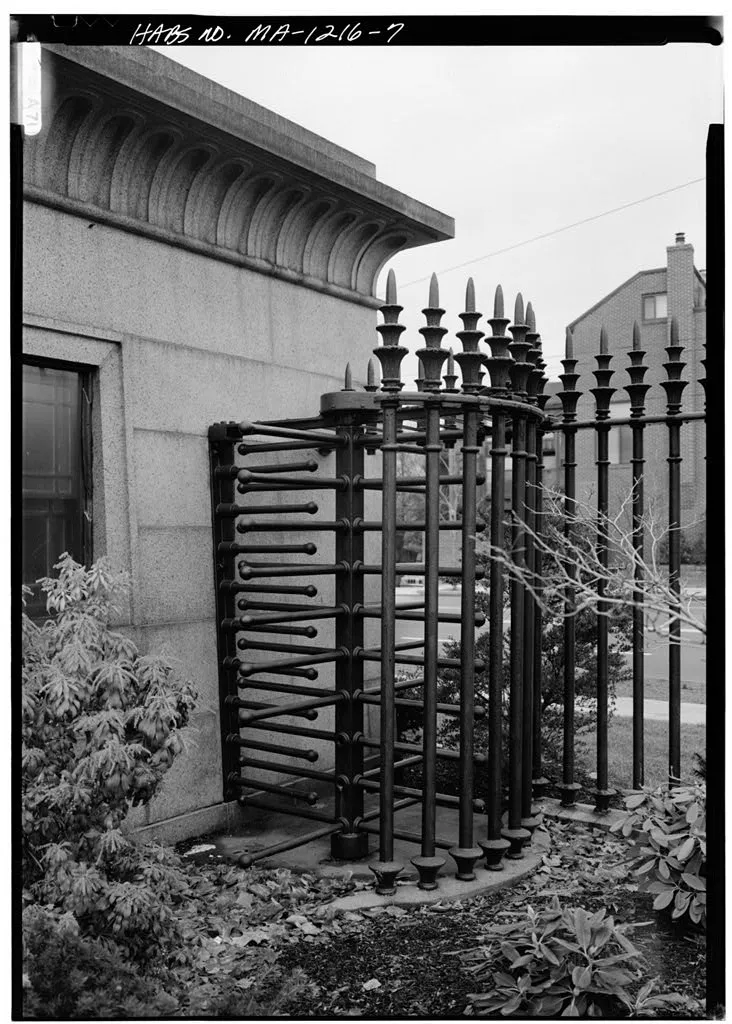
Photo: Jack E. Boucher., Public domain, via Wikimedia Commons
There is a moment every American developer knows by heart. The dashboard turns red, the client library throws, and the message reads: 429 Too Many Requests. Nobody panics. Nobody pages the on-call. The system did exactly what it was designed to do — it said not right now, told you when to come back, and moved on.
Now picture the same moment at a building entrance in downtown Chicago. Two hundred commuters arrive at 8:55 a.m. The turnstiles do their best, the lobby fills shoulder to shoulder, and the only feedback anyone gets is the physical experience of waiting. No headers. No retry guidance. No burst budget. Just crowding.
That gap is a design choice, and it is the wrong one.
Deny by Default, Even at the Door
The philosophy behind a well-built rate limiter is simple: capacity is finite, so access must be metered. You do not promise every caller unlimited throughput; you promise fairness, predictability, and a clear contract for what happens when demand exceeds supply.
Physical security rarely states the contract at all. A parking garage posts a sign when it's full — after the driver has already circled the block three times. A lobby bottleneck is treated as an staffing problem rather than an engineering problem. But the underlying math is identical to API capacity planning: a known throughput ceiling, variable arrival patterns, and a need for graceful degradation when the system saturates.
The difference is that developers have spent two decades formalizing the answer. Facility teams are still improvising it.
What a Retry-After Header Looks Like in the Physical World
A 429 response carries information. The Retry-After header tells the client exactly when to reattempt. X-RateLimit-Remaining tells it how close it is to the edge. None of this is kindness — it is efficiency, because informed clients self-regulate instead of hammering the endpoint.
Translate that to a venue or campus:
- Predictive capacity signals. If the garage at 82% full, say so on the approach road, not at the gate. Apps and dynamic signage are the physical equivalent of a rate-limit header.
- Staggered entry windows. Just as APIs issue token buckets with refill intervals, badge systems can schedule cohort arrival windows for shift changes, conferences, or move-in days.
- Queue transparency. A lobby display showing estimated wait time converts an opaque failure into a metered one. People tolerate throttling; they do not tolerate silence.
The pattern generalizes further than most security directors assume. Stadium entry, airport security lines, and even elevator banks during a high-rise lunch rush are all throttling problems wearing lanyards.
Burst Budgets and Turnstile Throughput
Rate limiters distinguish between sustained load and bursts, and so should buildings. A turnstile that processes twenty people per minute can absorb a burst of forty — briefly — by leaning on the queue behind it. But sustained arrival above throughput is not a burst; it is a saturation event, and no amount of queueing fixes it.
API designers solve this with burst budgets: a small allowance of excess demand that absorbs spikes without punishing baseline traffic. Facility engineers have physical analogues — extra lanes opened on demand, badge readers on both sides of a corridor, lobby overflow zones — but they are rarely provisioned with the same deliberate math. The result is infrastructure sized for the average day and humiliated by the extraordinary one, whether that's a Black Friday opening at a Dallas retail flagship or a fire drill at a Boston office tower.
Graceful Degradation Is Not Failure
The most underappreciated property of a good 429 is that it is not an error in the emotional sense. The request was denied; the system was not. Clients route around it, cache more aggressively, or reschedule. The service stays up.
Physical access systems tend to degrade badly instead. When throughput fails, the fallback is often a human with a clipboard — slower, less accountable, and unaudited. A better architecture defines degraded modes in advance: which doors stay credential-controlled under load, which go to timed one-way flow, which metrics trigger the shift. The goal is that a saturation event produces a known state, not an improvised one.
Mapping the Contract
At Map2Key, we think about the seam between digital credentials and physical geography constantly, and rate limiting is where that seam shows most clearly. A geofence tells you where access applies; a rate limit tells you how much and when. A building that meters both — capacity per zone, arrival windows per cohort, live signals to approaching users — is running an access contract that a developer would recognize instantly.
None of this requires new physics. It requires borrowing a discipline the software world already perfected: state the limit, signal the state, degrade gracefully, and never leave the client guessing. The turnstile has always had a rate limit. It is time it admitted it.