Ghost Keys in the Machine: Why Your Revoked Credentials Are Still Working the Night Shift
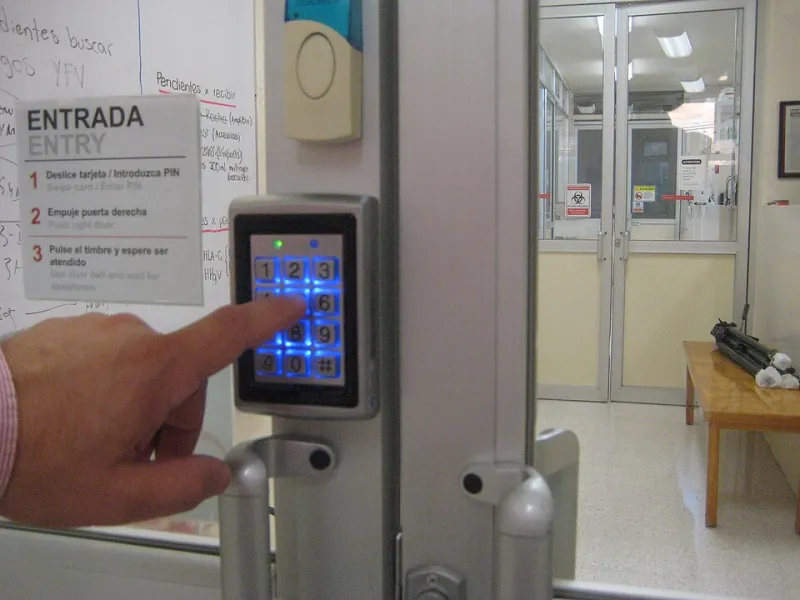
Photo: Ca.garcia.s, CC BY-SA 4.0, via Wikimedia Commons
At 2:47 PM on a Tuesday, a facilities manager at a mid-size logistics company in Columbus, Ohio, watches a terminated contractor badge open the loading dock door. The access management dashboard, queried moments later, shows exactly what it should: the credential was revoked at 1:15 PM. The database is clean. The policy engine agrees. And yet the door swung open anyway.
Nothing about this scenario is exotic. It is the single most common failure mode in physical-digital access systems, and it stems from an uncomfortable truth: in distributed access control, revocation is a message, not a state. Until that message reaches every device that can grant entry, the credential is, functionally speaking, still valid.
The Cache Is the System
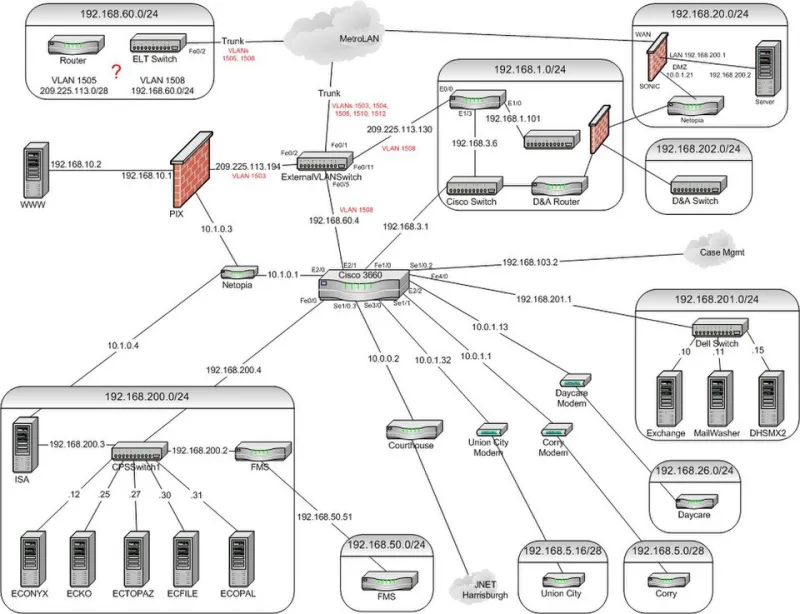
Developers who spend most of their time in web infrastructure tend to think of caches as a performance optimization — nice to have, safe to lose. Physical access control inverts that assumption. A door controller in a parking garage in Phoenix cannot phone home on every badge tap; the latency would be intolerable and the network dependency unacceptable. So the controller holds a local allowlist, synced periodically from the central system.
That local allowlist is the access control system for practical purposes. The cloud database is a ledger of intentions. The gap between the two is where ghost keys live.
The same pattern repeats across the modern stack: API keys cached at CDN edges, vehicle telematics units holding credential bundles downloaded at the start of a shift, offline-capable smart locks that batch-sync overnight. Each layer introduces its own propagation delay, and each delay is a window during which a revoked credential works perfectly.
TTL Tradeoffs: The Dial Nobody Wants to Turn
The blunt-instrument fix is a short time-to-live. Sync every thirty seconds and any revocation propagates within a minute. The problem is that short TTLs are expensive in ways that don't show up on a dashboard until later.
Consider the arithmetic. A fleet of 4,000 connected devices polling credential state every 30 seconds generates sustained request volume that dwarfs actual access events by orders of magnitude. For a SaaS platform billing on API usage, that polling traffic becomes a line item. For on-prem edge hardware with cellular backhaul — think trucks crossing rural interstate between distribution centers — it becomes a connectivity problem, too.
The pragmatic middle ground most mature deployments converge on looks like this:
- Long TTLs (hours) for routine allowlist syncs, accepting that ordinary revocations propagate slowly.
- A fast revocation channel for the short list of credentials that matter immediately — terminated employees, lost badges, compromised service keys. This is a push, not a pull.
- Local expiry enforcement, so a device that loses connectivity cannot honor a credential indefinitely.
The critical design decision is treating revocation as a distinct event class with its own delivery guarantees. Most systems fail not because they lack sync, but because they lump revocations in with the general firehose of credential updates.
Building a Source-of-Truth Audit
Caches will drift. The question is whether you find out from an audit or from an incident. A source-of-truth audit closes that gap, and it's less involved than it sounds.
The core loop: periodically query your authoritative store for the set of credentials that should be valid, then sample real devices and ask what they believe is valid. Diff the two sets. Any credential present on a device but absent from the source of truth is a ghost key, regardless of how plausible the excuse — stale sync, missed push, firmware quirk.
Three practices make the audit trustworthy:
Sample adversarially. Don't poll the devices that are easy to reach. Include the badge reader behind the mezzanine, the delivery van that only docks on weekends, the regional office with the flaky VPN tunnel. Ghost keys cluster exactly where visibility is worst.
Test with synthetic credentials. Issue a decoy key, revoke it, and verify that every device in the sample stops honoring it within your stated propagation window. This turns "we believe revocation works" into a measured SLA.
Alert on drift, not just on breach. A ghost key discovered by an audit is a bug ticket. The same ghost key discovered by a door event report is a legal matter. The difference is whether your monitoring compares intent against reality continuously.
The Boundary Is the Product
There's a broader lesson here for teams building on mapping and access infrastructure. The moment your system's authority spans a network boundary — cloud to edge, datacenter to vehicle, SaaS to on-prem controller — you have implicitly accepted that your database describes the past and your devices describe the present. Reconciling the two is not an edge case to document; it is the core engineering problem.
Teams that internalize this stop asking "is the credential revoked?" and start asking "how long until every device agrees it's revoked?" That second question has an answer, that answer can be measured, and measuring it is the difference between a Tuesday afternoon anomaly and a Friday night breach.
The ghost key that opened the loading dock in Columbus was found by an audit, not a news report. That outcome was a design decision, made months earlier, by engineers who assumed their caches would lie to them. Assume the same. Build accordingly.